

How to Set Up Your Cat Feeding Station for Success
Your choice of cat bowls impacts your pet's health more than the expensive food you put inside them. It's a common mistake to overlook the physical feeding setup. Many owners face daily messes, scattered kibble, and the stress of multiple cats fighting over a single spot.
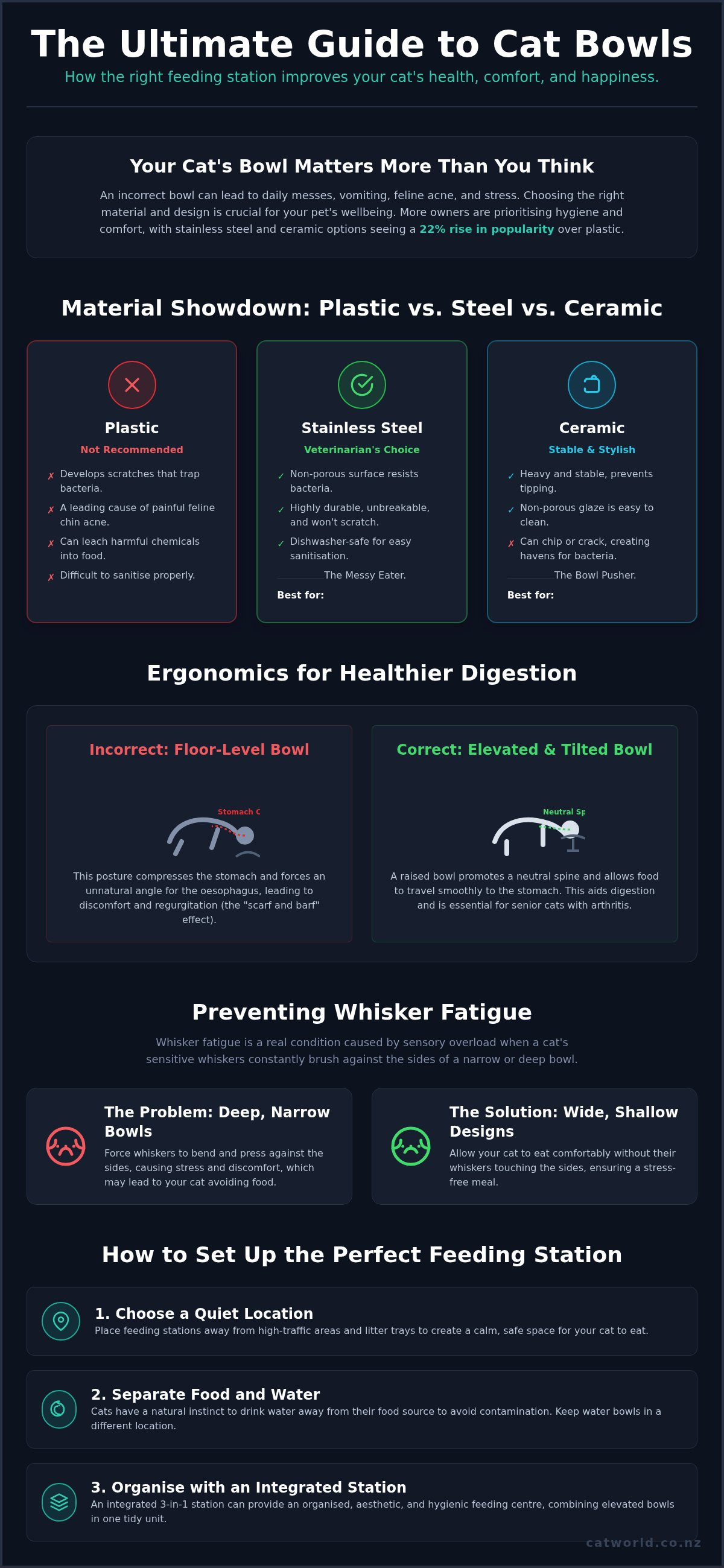
You likely want a clean kitchen floor and a pet that eats without discomfort. It's frustrating to deal with feline acne or see your cat struggle with whisker fatigue. With stainless steel and ceramic options seeing a 22% rise in popularity over plastic, more owners are now prioritising hygiene and physical comfort.
This guide explains how to select the right materials and organise a station for success. You'll learn to prevent vomiting through better ergonomics and create a stress-free feeding area. We cover everything from whisker-friendly designs to integrated 3-in-1 stations for a healthier, happier cat.
Key Takeaways
- Understand how bowl height and tilt angles aid digestion and prevent vomiting in cats.
- Compare the hygiene benefits of stainless steel and ceramic versus plastic cat bowls to prevent feline acne.
- Identify the signs of whisker fatigue and learn how to select wider designs for stress-free eating.
- Learn the strategic placement rules to keep food and water stations separate and quiet.
- Discover how an integrated 3-in-1 feeding station creates a more organised and aesthetic feeding centre.
Understanding the Importance of Cat Bowl Ergonomics
The physical design of cat bowls is a critical factor in feline wellness. Most owners select a dish based on appearance or price, but the height and angle of the feeding surface directly impact how a cat processes its meal. When a cat eats from a floor-level dish, its neck is bent and its stomach is compressed. This unnatural posture often leads to digestive issues and physical discomfort during mealtime.
Posture and Digestive Health
Eating in a deep crouch can lead to a common issue known as "scarf and barf". This occurs when the oesophagus is angled downward, making it difficult for food to travel smoothly to the stomach. Using slightly elevated bowls allows for a more linear path, aiding natural swallowing and reducing the risk of regurgitation. This is particularly important for preventing conditions like megaesophagus, where the oesophagus becomes enlarged and loses the ability to move food properly. For a comprehensive overview of feline nutrition, understanding how food is physically consumed is just as vital as the ingredients themselves.
Senior cats benefit significantly from ergonomic adjustments. Cats with arthritis or joint stiffness find it painful to lower their heads to the floor for extended periods. Raised feeding stations reduce the strain on the neck and front limbs, allowing older pets to maintain a neutral spine. This simple change can encourage a consistent appetite in cats that might otherwise skip meals due to physical pain. A secure, dedicated feeding area also provides psychological comfort for anxious pets, as they feel less vulnerable when their head is in a more upright, observant position.
Hygiene and Bacterial Prevention
Material choice is the second pillar of feeding station success. Porous materials, such as certain plastics, develop microscopic scratches over time. These tiny grooves trap bacteria and food particles that remain even after a standard rinse. This bacterial buildup is a primary cause of feline acne, which appears as black chin spots or inflamed bumps on the chin. Switching to non-porous surfaces like stainless steel or ceramic eliminates these hiding spots for microbes. In multi-cat households, sharing contaminated bowls increases the risk of spreading infections between pets. Proper hygiene combined with ergonomic design ensures the feeding area remains a healthy environment rather than a source of medical stress.
Choosing the Best Materials for Your Cat Bowls
Material choice dictates the long-term hygiene and safety of your feeding area. While plastic dishes held a 32.5% market share in 2025, recent trends show a 22% increase in sales for stainless steel and ceramic alternatives. This shift reflects a growing awareness of how material durability affects pet health. Selecting the right cat bowls involves balancing sanitisation needs with your pet's specific eating habits.
The Problem with Plastic Bowls
Plastic is the least recommended material by New Zealand veterinarians. Cheaper plastic resins often contain chemicals that can leach into food over time. More importantly, plastic is a soft material. It develops microscopic scratches during daily use and cleaning. These tiny crevices harbour deep-seated bacteria that standard hand-washing cannot reach. This bacterial buildup is the leading cause of feline chin acne, a painful skin condition. If you want to maintain a sterile environment, plastic is rarely the right choice.
Stainless Steel vs. Ceramic: Which Wins?
High-quality stainless steel is the gold standard for sanitisation. It's non-porous, unbreakable, and dishwasher safe. It doesn't scratch easily; this ensures a smooth surface that resists bacterial growth. For owners who prioritise a unified and clean setup, an integrated 3 in 1 cat feeding station often uses these durable materials to maintain high hygiene standards. Stainless steel is the most practical option for busy households where durability is a priority.
Ceramic bowls offer weight and stability. They're difficult for "bowl flippers" to move or tip over. They come in various colours to match home decor, providing a more personalised look. However, they require careful handling. Any chips or cracks in the glaze create new porous areas for bacteria to grow. When researching how to best manage Feeding Your Cat, material safety and ease of cleaning are the most important factors to consider.
To choose between the two, consider your cat's personality:
- The Messy Eater: Stainless steel is best. It's easy to deep-clean and won't break if knocked.
- The Bowl Pusher: Heavy ceramic is better. The extra weight prevents the dish from sliding across the floor.
- The Senior Cat: Either material works well, provided the dish is part of an elevated setup to reduce joint strain.
Both materials are vastly superior to plastic. They provide a non-toxic, easy-to-clean surface that supports long-term health. Avoid porous options to ensure your cat's feeding station remains a hygienic space.
What is Whisker Fatigue and How to Prevent It?
Whisker fatigue is a common but often ignored cause of eating difficulties. It occurs when a cat's highly sensitive whiskers constantly touch the sides of deep cat bowls. This repeated contact creates a sensory overload that makes mealtime stressful rather than satisfying. Owners often mistake this physical discomfort for fussiness or a lack of appetite.
The Science of Feline Whiskers
Whiskers, or vibrissae, are sophisticated tactile organs connected directly to the feline nervous system. These hairs are deeply rooted in follicles packed with sensory cells. They detect subtle air currents and the exact position of nearby objects. When a cat reaches into a deep or narrow dish, the whiskers bend against the rim. This constant brushing sends a relentless barrage of signals to the brain. It's an "overload" sensation that causes genuine physical irritation. To avoid this, cats naturally prefer to eat from the centre of a wide dish where their whiskers remain untouched.
Identifying Whisker Stress in Your Home
Recognising the signs of sensory stress is the first step toward a better feeding setup. Cats rarely become "fussy eaters" without an underlying physical or environmental trigger. If your pet exhibits these behaviours, they likely find their current dish uncomfortable:
- Pawing food out of the bowl to eat it off the floor.
- Leaving a ring of food around the edges while clearing only the centre.
- Acting hungry and vocalising but hesitating to approach the dish.
- Aggression or irritability toward other pets during mealtime.
- Dropping food repeatedly while attempting to chew.
Deep water bowls are just as problematic as deep food dishes. If a cat splashes water out with their paw or seems reluctant to drink, they're likely avoiding the sensory pressure on their vibrissae. This behaviour often leads to dehydration as the cat avoids the water station entirely.
The ideal bowl shape is wide, shallow, and flat-bottomed. This design ensures the cat can reach every morsel of food without their whiskers contacting the sides. When you transition to shallow cat bowls, expect a brief adjustment period. During the first week, your cat might still paw food onto the floor out of habit. Once they realise the sensory pressure is gone, they will typically settle into a more relaxed eating routine. This structural change is a simple way to improve your cat's daily comfort and long-term health.
Setting Up Your Cat Feeding Station: A Step-by-Step Guide
Creating a successful feeding area requires more than just placing cat bowls on the floor. It involves strategic placement to ensure your pet feels secure and remains hydrated. A well-organised station reduces mess and supports the natural instincts of your cat. Follow these five steps to establish a functional feeding centre.
- Step 1: Choose a quiet, low-traffic area. Select a spot away from the main household thoroughfare. Cats feel vulnerable while eating and prefer a location where they won't be bumped or startled by sudden movements.
- Step 2: Separate food and water stations. In the wild, cats avoid water sources near their prey to prevent contamination. Placing water dishes in a separate room or at least a few metres away encourages better hydration.
- Step 3: Maintain distance from the litter box. Hygiene is paramount. Ensure the feeding station is at least two metres away from any litter trays to prevent cross-contamination and maintain your cat's appetite.
- Step 4: Use a non-slip mat or an integrated station. This prevents the "travelling bowl" effect where a cat pushes their dish across the room. It also protects your floorboards from water damage and food stains.
- Step 5: Establish a consistent cleaning schedule. Wash all dishes daily to prevent bacterial buildup. This is especially important if you use porous materials or live in a multi-cat household.
Ideal Placement in an NZ Home
Many New Zealand homes use the laundry as a primary utility space, but this is often a poor choice for a feeding area. The vibration and sudden noise from a washing machine on a spin cycle can cause mealtime anxiety. Instead, select a quiet corner of the kitchen or a spare hallway. Ensure your cat has a clear line of sight and is not "trapped" in a corner. They prefer being able to see people or other pets approaching from a distance while they eat.
Managing Multi-Cat Households
Conflict often arises when cats are forced to share a single feeding spot. Follow the "N+1" rule; provide one more station than you have cats. If you have two cats, set up three separate areas in different rooms. This prevents resource guarding, where a dominant cat blocks another from accessing their food. If you also have a dog, consider using elevated stations. Placing cat bowls on a higher surface keeps the dog away from the cat's dinner and allows the cat to eat in peace. To keep your kitchen tidy and your pet's routine organised, consider a 3 in 1 cat feeding station for a unified, no-nonsense solution.
The Benefits of an Integrated 3-in-1 Cat Feeding Station
Moving away from individual cat bowls toward a unified station simplifies household management. While separate dishes offer some placement flexibility, they often lead to a cluttered kitchen and more cleaning work. An integrated 3-in-1 station keeps food, water, and treats organised in a single, dedicated location. This setup creates a consistent routine for your pet and a tidier environment for you.
Practicality is the primary advantage of a unified feeding centre. Individual dishes are easily pushed across the floor during enthusiastic eating. This "chasing" of bowls creates noise and spreads mess across the kitchen tiles. An integrated design provides the weight and stability needed to keep everything stationary. It ensures that water doesn't spill when a cat nudges its food dish, protecting your flooring from moisture and stains.
Features of the Cat World 3-in-1 Station
The 3 in 1 Cat Feeding Station is designed for the modern Australian and New Zealand home. Its compact footprint fits easily into smaller kitchen layouts or utility rooms without obstructing foot traffic. Stability is a core feature; the non-slip base prevents the unit from sliding on polished surfaces. Hygiene remains a priority, as the station includes high-quality stainless steel inserts. These removable bowls are non-porous and resist the bacterial buildup discussed earlier, making them a safer choice than plastic alternatives.
Maintaining Your Feeding Station
A consistent cleaning routine is essential for long-term health. You should wash the stainless steel inserts daily with warm, soapy water. Avoid harsh chemical cleaners that leave strong scents, as these can deter cats from eating. For a deeper clean, the bowls are dishwasher safe. Wipe down the main station base once a week to remove any stray kibble or water spots. This simple maintenance keeps the area looking professional and smelling fresh.
Once you've perfected the kitchen, you can extend this sense of order to the rest of your home. Pair your station with our cat beds for a complete comfort zone where your pet can relax after a meal. Choosing an integrated solution solves the everyday problems of scattered dishes and unorganised supplies. It provides a stable, hygienic, and aesthetic centre for your pet's daily needs. Organise your kitchen with our 3-in-1 Cat Feeding Station today to create a more efficient home for you and your cat.
Upgrade Your Cat's Daily Feeding Routine
A successful feeding station relies on the balance between hygiene, ergonomics, and placement. Choosing non-porous materials and shallow designs prevents common issues like feline acne and whisker fatigue. By separating food and water and selecting a quiet location, you support your pet's natural instincts and reduce mealtime anxiety. These small adjustments lead to better digestion and a cleaner, more organised home environment.
Our range of cat bowls and integrated stations is curated by cat lovers for cat owners. Every product features practical designs tested for durability in busy households. We provide NZ-based shipping for fast delivery to ensure you can improve your pet's setup quickly. A well-designed station is a simple investment in your cat's long-term health and comfort.
Shop our range of Cat Bowls and Feeding Stations today to find a reliable solution for your kitchen. Creating a stress-free feeding area is the best way to ensure your cat remains happy and well-nourished.
Frequently Asked Questions
How often should I wash my cat’s food bowls?
Wash your cat's dishes after every meal or at least once daily. Food residue and saliva create a biofilm that attracts bacteria and household pests. Daily sanitisation with warm, soapy water is essential for preventing digestive upset and skin conditions. For busy households, having multiple sets of cat bowls allows for a fresh rotation while the used ones are being cleaned.
Why does my cat move food out of the bowl and onto the floor?
This behaviour is a primary sign of whisker fatigue or sensory overload. When a cat's whiskers touch the sides of deep dishes, it causes physical discomfort. Moving food to the floor is a tactical choice to eat in a more relaxed way. Switching to wide, shallow dishes usually resolves this problem and keeps the kibble contained within the feeding area instead of scattered across your kitchen tiles.
Are raised cat bowls better for digestion?
Raised dishes facilitate a more linear path for food to travel through the oesophagus. This alignment aids natural swallowing and significantly reduces the frequency of regurgitation or "scarf and barf" incidents. For older cats in New Zealand homes, elevated stations also minimise the need to crouch, which protects stiff joints and encourages a more consistent appetite during colder months when arthritis might flare up.
Is it okay to put my cat’s food and water bowls next to each other?
Cats naturally prefer their water source to be separate from their food. In the wild, water near a kill site is often contaminated, so felines evolved to seek hydration elsewhere. Placing water dishes at least two metres away from food stations often encourages cats to drink more frequently. This separation supports kidney health and mimics their natural hunting and drinking patterns for better long-term wellness.
What is the best material for cat bowls to prevent feline acne?
Stainless steel and ceramic are the best materials because they are non-porous and easy to sterilise. Plastic develops microscopic scratches over time that harbour deep-seated bacteria, which is the leading cause of feline chin acne. Choosing high-quality, smooth surfaces ensures that bacteria cannot hide in the dish, keeping your pet's skin clear and healthy without the need for harsh chemicals or frequent veterinary visits.
How many bowls should I have for two cats?
You should provide three separate feeding stations for two cats. Following the "N+1" rule ensures that there is always a spare resource available, which prevents dominant cats from guarding the food. Spacing these stations in different rooms allows each pet to eat in peace without the stress of competition. This simple organisational change reduces household tension and prevents mealtime aggression in multi-cat environments.
Why does my cat paw at the water in their bowl?
Pawing at the water is often a way for cats to check the water level or create movement. Since cats have poor near-vision, they struggle to see the surface of still water in a dish. Pawing creates ripples that make the water visible. It can also be a sign of whisker stress if the cat bowls are too narrow, as the cat tries to pull the water out to drink more comfortably.
Can I wash my cat’s stainless steel bowls in the dishwasher?
Stainless steel dishes are completely dishwasher safe and highly durable. High-temperature dishwasher cycles provide a level of sanitisation that manual scrubbing cannot achieve, effectively killing off stubborn bacteria. Always check for any non-slip rubber bases before washing, as these may need to be removed or hand-washed separately. Using the dishwasher is a practical way to maintain a clinical level of hygiene in a busy New Zealand home.